
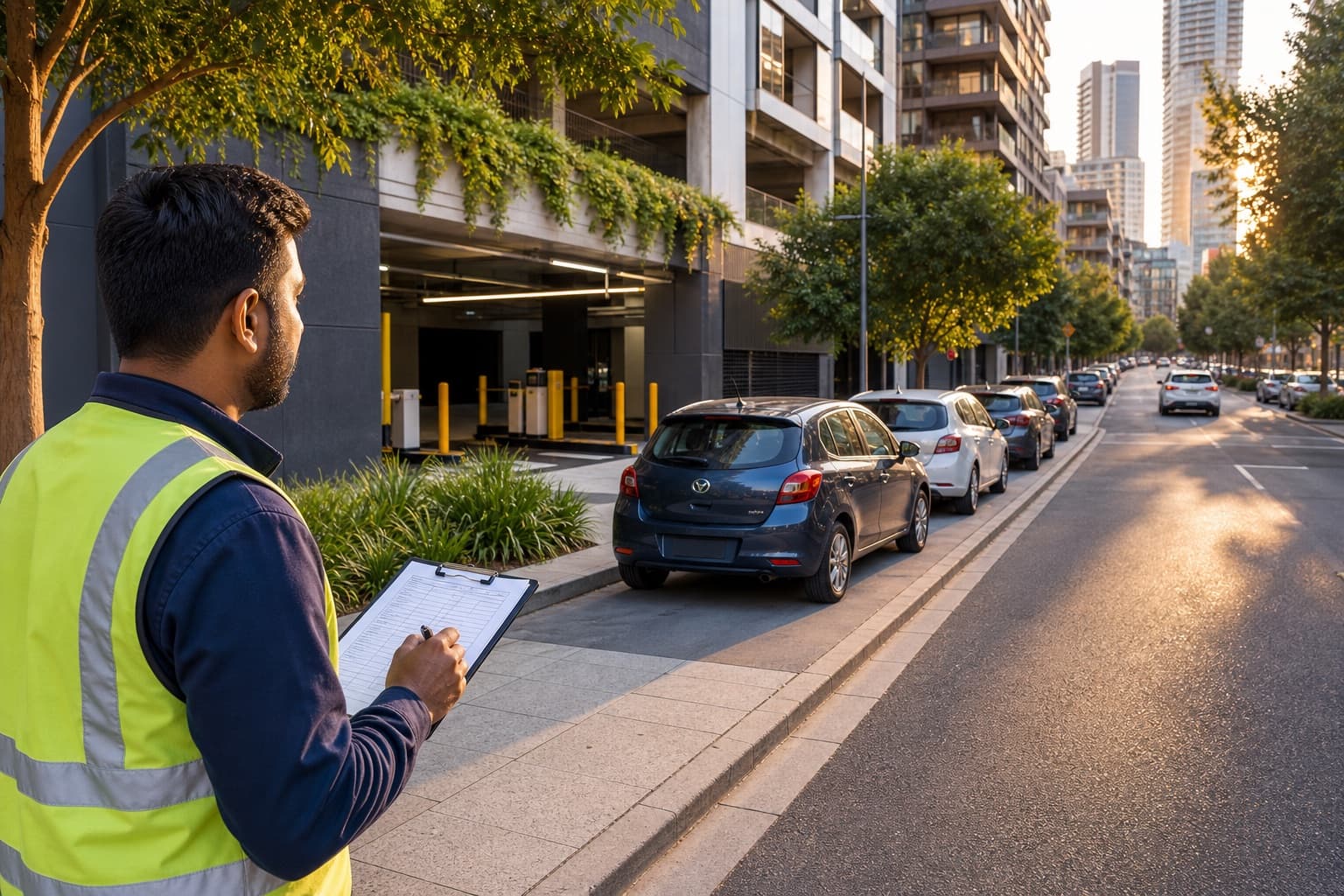
Service summary
Parking studies can measure occupancy, utilisation, entry-exit activity, turnover and duration when the scope supports each measure.
When it is used
Use them for development, operational, management and urban-planning questions.
Methodology
Map the parking boundary and eligible-space inventory, then set the observation sweep or event method.
Inputs and source requirements
Provide site plan, inventory treatment, timing, bay types and measures required.
Movements and classifications
Parking circulation and entry-exit movements are kept distinct from occupancy unless both are specifically scoped.
Time intervals
Sweep frequency is selected for the intended occupancy or change pattern.
Typical deliverables
Occupancy tables, inventory note, entry-exit/turnover outputs where scoped and exceptions.
Quality control
Reconcile occupied spaces with the eligible inventory for every observation period.
Limitations
Parking occupancy is not by itself a forecast of future parking demand.
Privacy and security
Registration or personal data is not published; secure handling is agreed if a lawful study requires it.
Frequently asked questions
Can restricted bays be excluded?
Yes, if the inventory states how each bay type is treated.
Does occupancy predict future demand?
No. It describes observed use for the defined boundary and period.
Can turnover and duration be measured?
Yes, when the observation method can track the defined parking events and the inventory is stable.
Should loading and reserved bays be included?
Only when the brief states their eligibility and treatment in the parking inventory.