
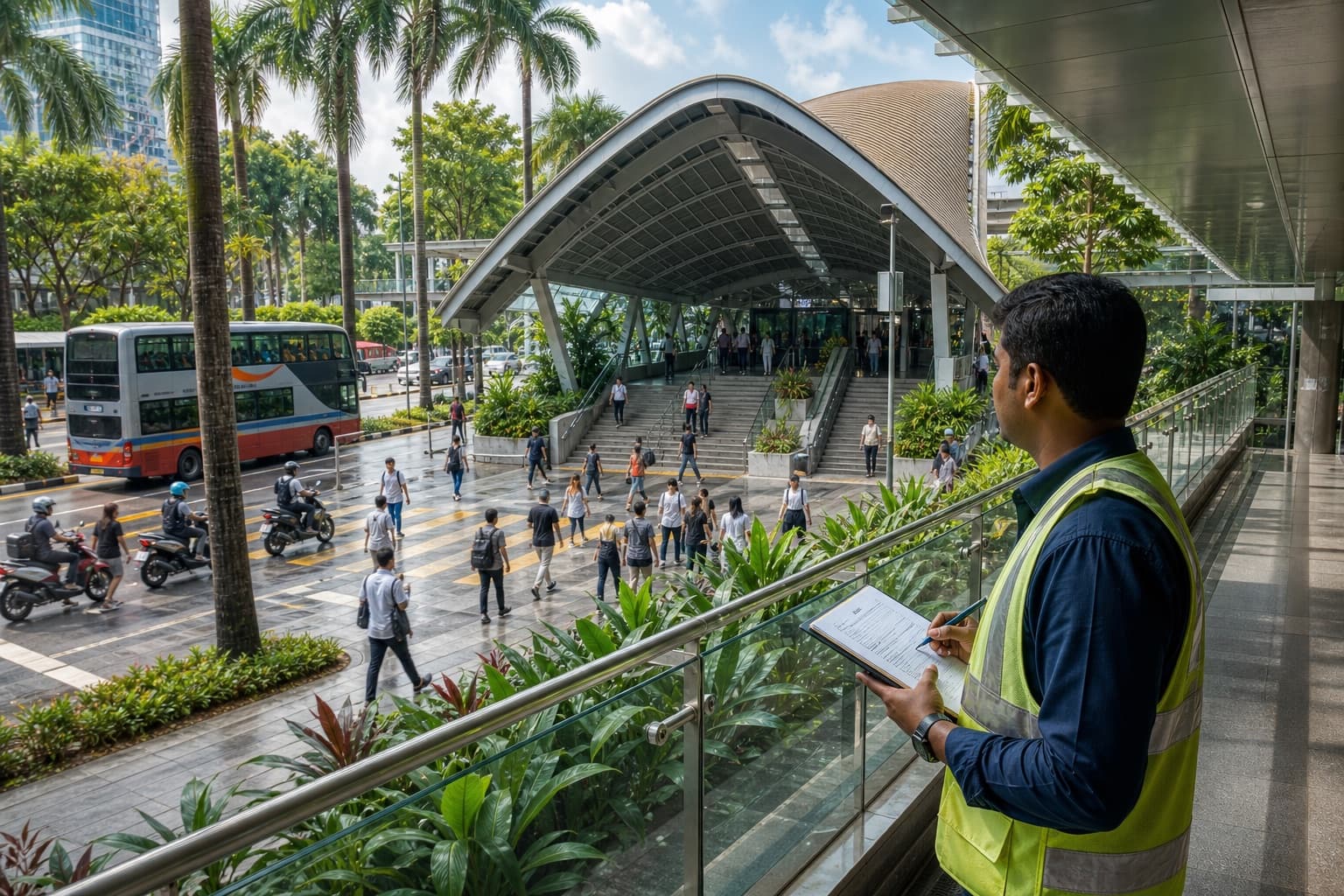
Service summary
Metro station counts provide a structured record of specified pedestrian and vehicle movements around a metro environment.
When it is used
Use them for station access, urban mobility and interchange questions.
Methodology
Set station entrances, curbside zones, routes, periods and mode treatments before observation.
Inputs and source requirements
Provide a location plan, dates, periods, defined observations, any classifications and required output files.
Movements and classifications
Movement, direction, lane and classification rules are agreed only where they are relevant to this study.
Time intervals
Set the reporting interval and any peak or operating windows before collection or processing.
Typical deliverables
Agreed data tables, location and methodology notes, defined assumptions and quality-review information.
Quality control
Check coverage, definitions, interval structure and delivery format against the approved brief.
Limitations
The result describes the defined observed scope and period; it should not be used to make claims beyond the available evidence.
Privacy and security
Sensitive files, video and identifiers are exchanged only through approved project workflows.
Frequently asked questions
Can multiple entrances be compared?
Yes, with a named entrance plan and consistent intervals.
Can curbside activity be included?
Yes, if the curb boundary and event rules are defined.